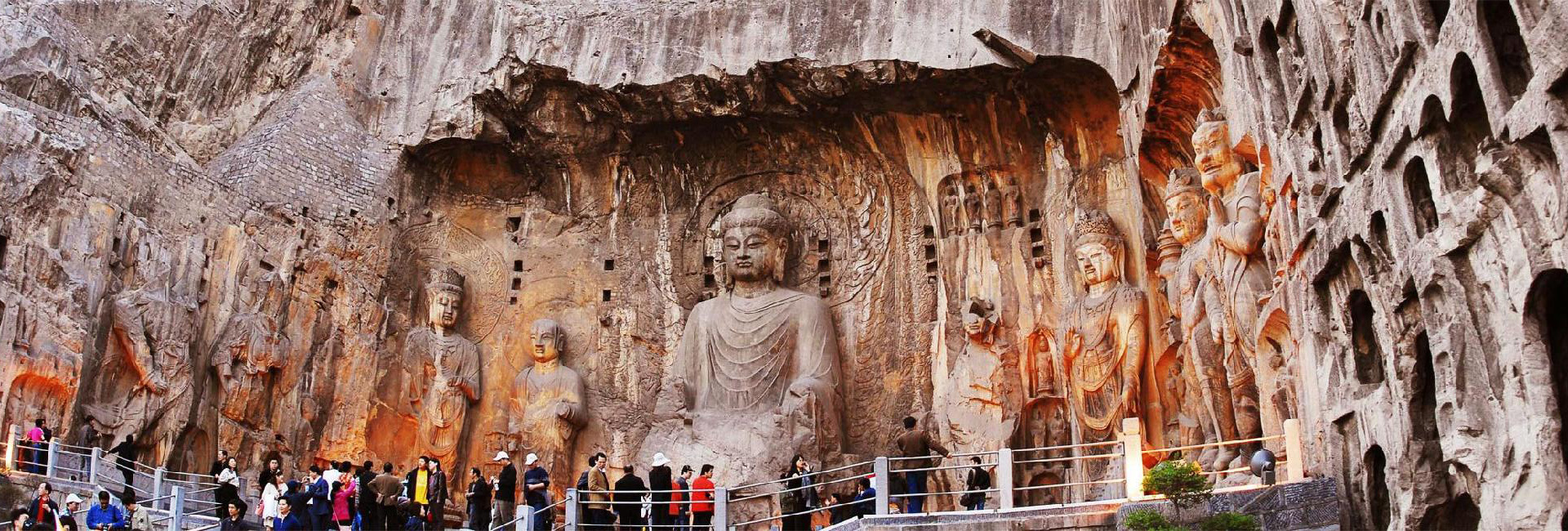
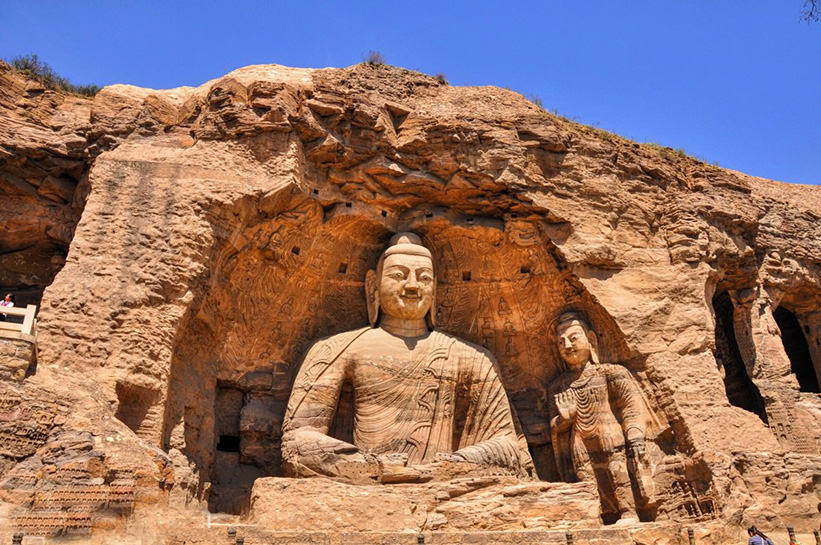
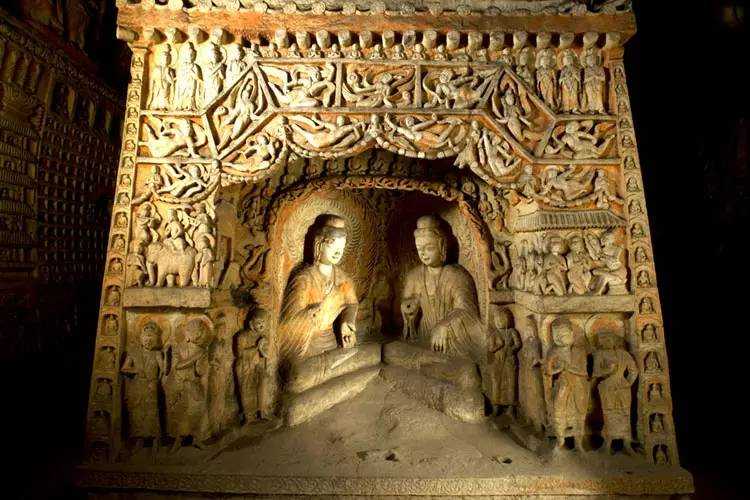
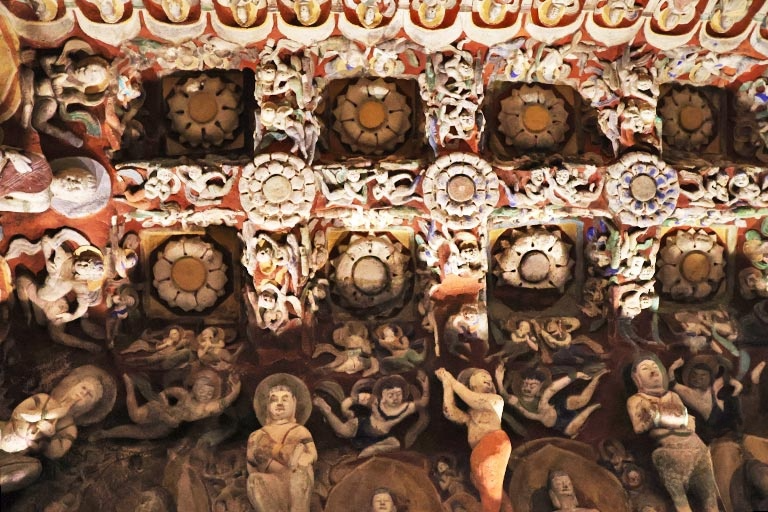
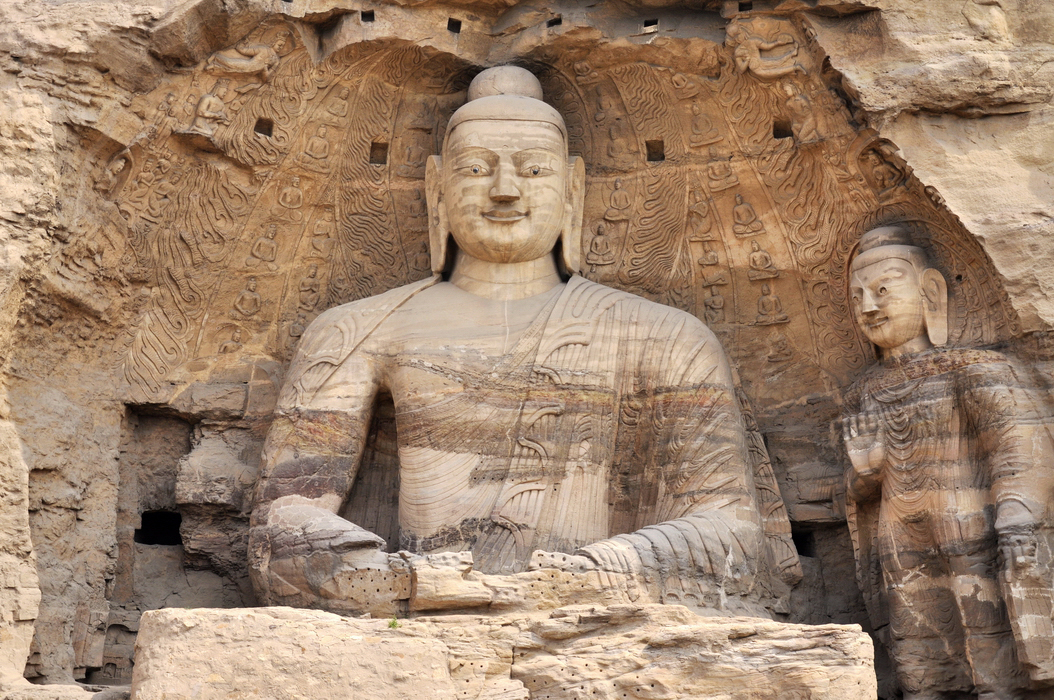
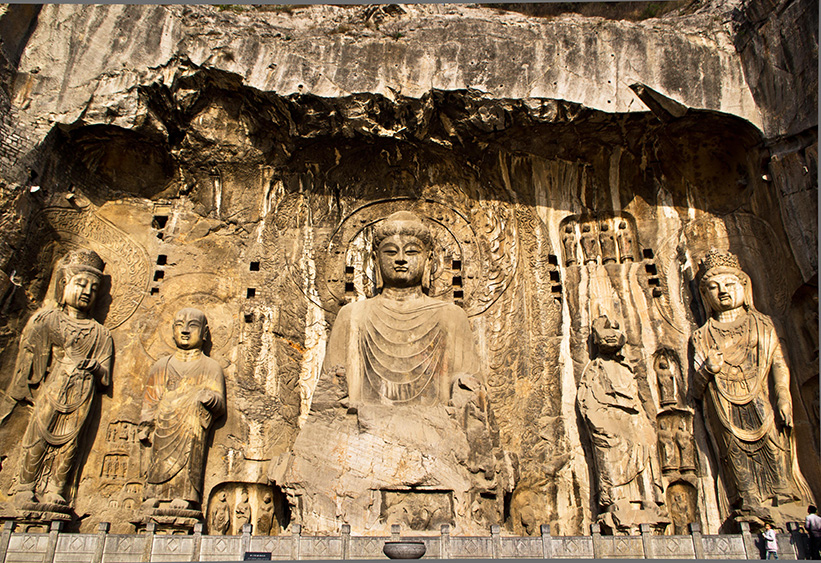
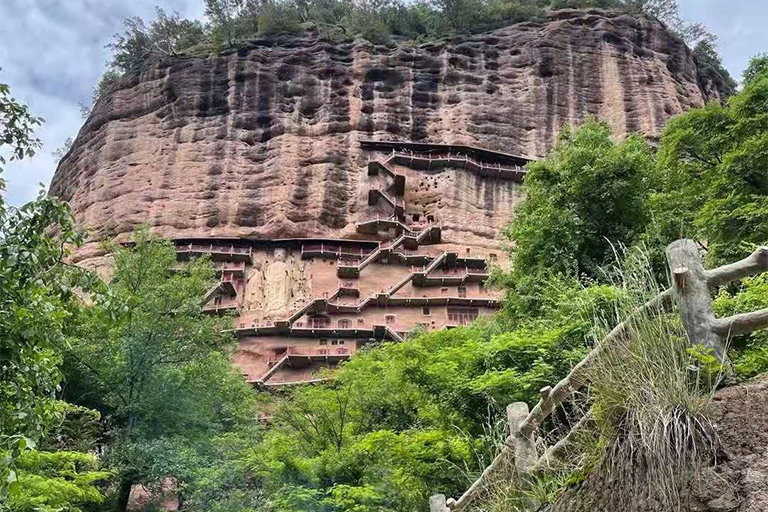
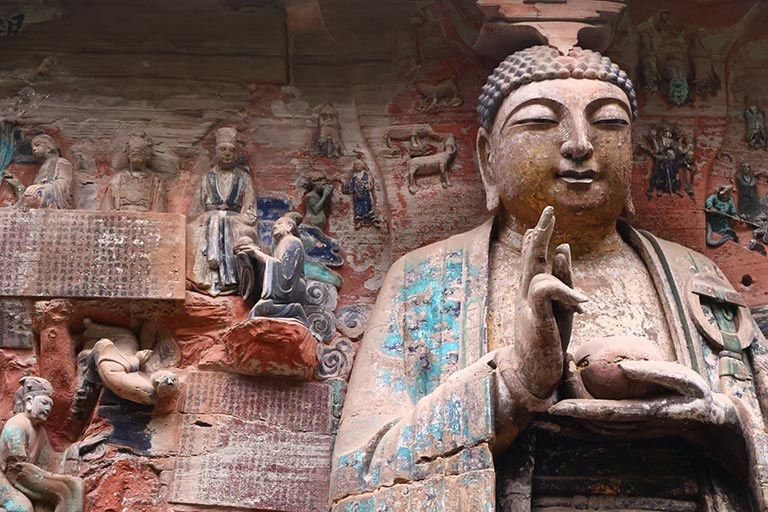
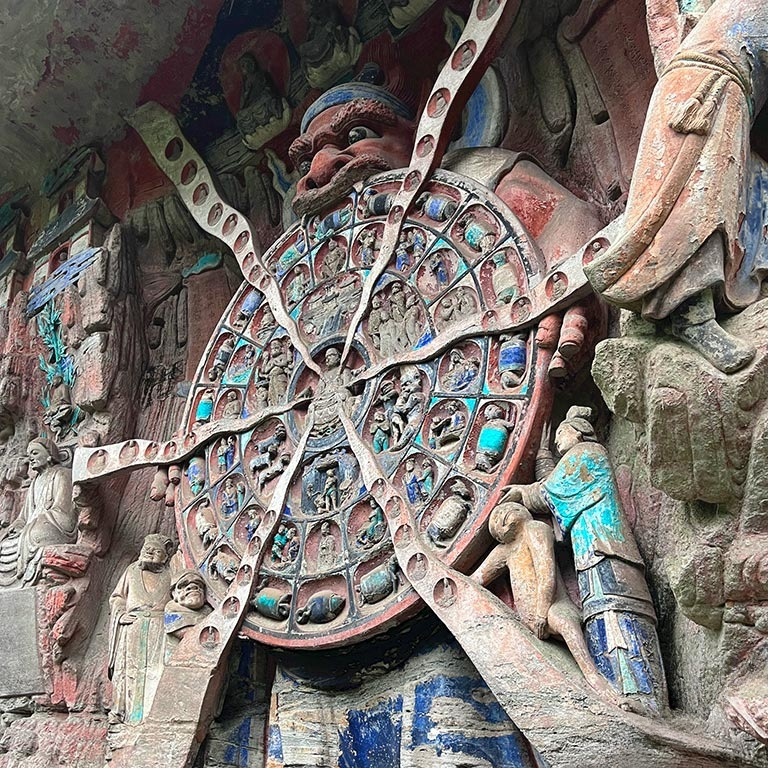
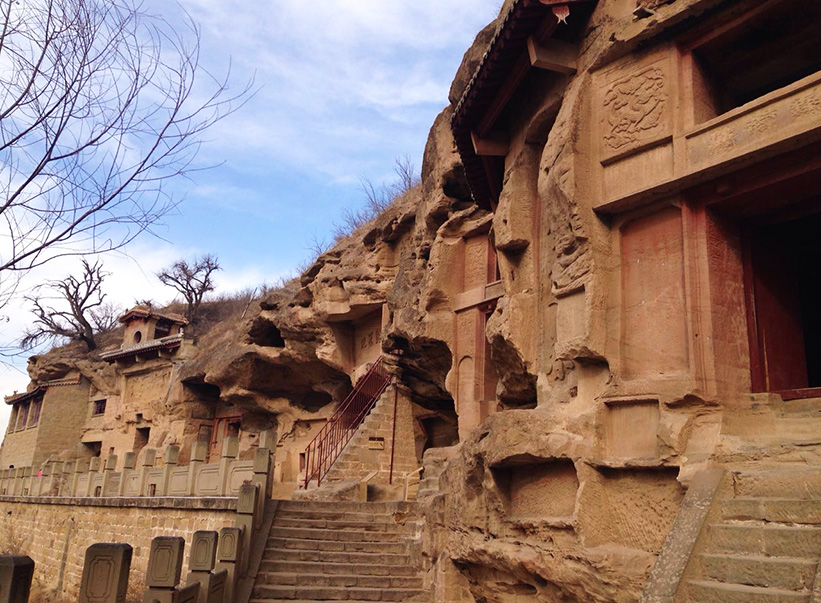
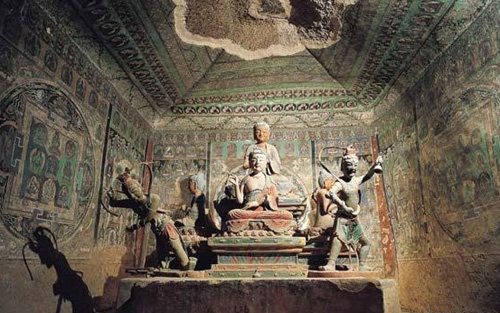
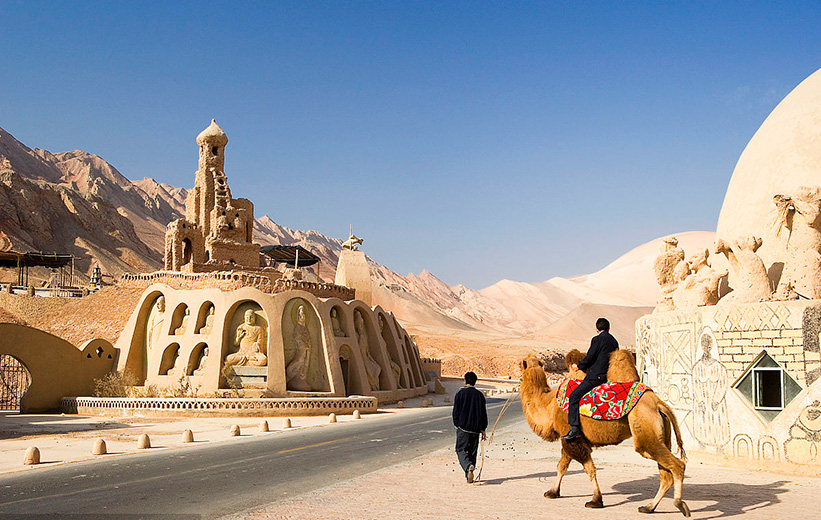
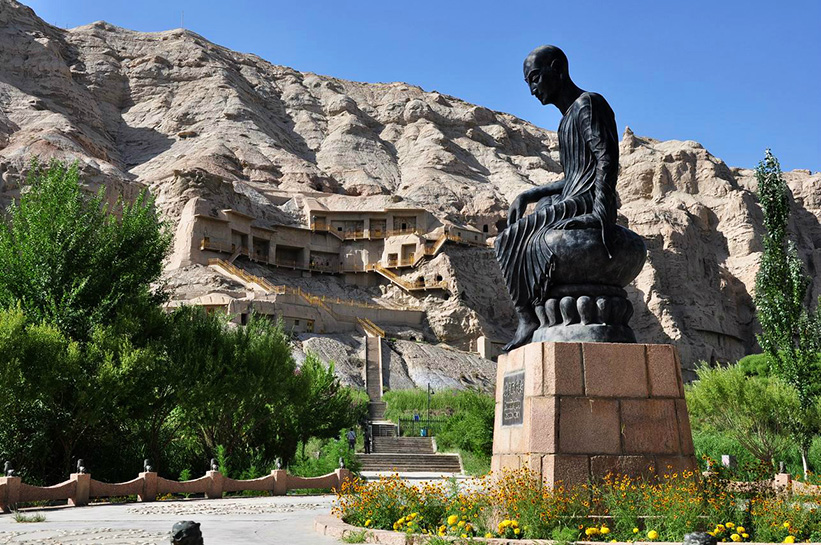
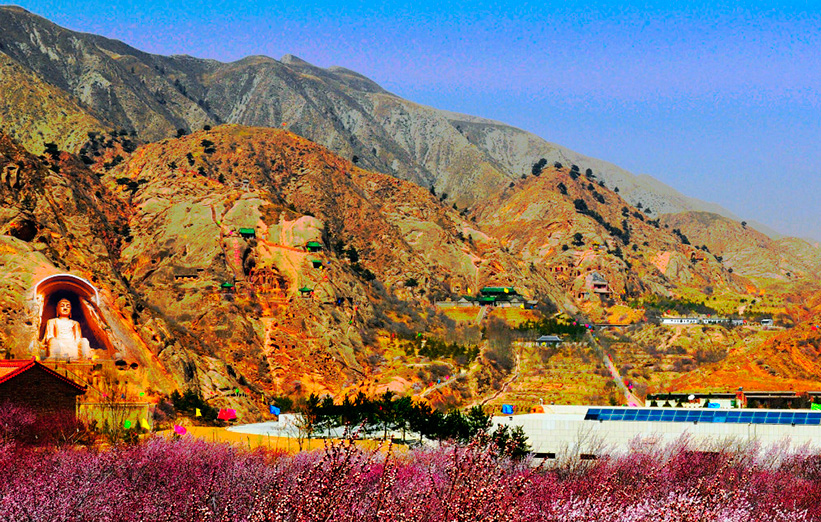
Mogao Caves (莫高窟), known as Thousand Buddha Grottoes, comprises the largest, most richly endowed and longest used treasure house of Buddhist art in the World.
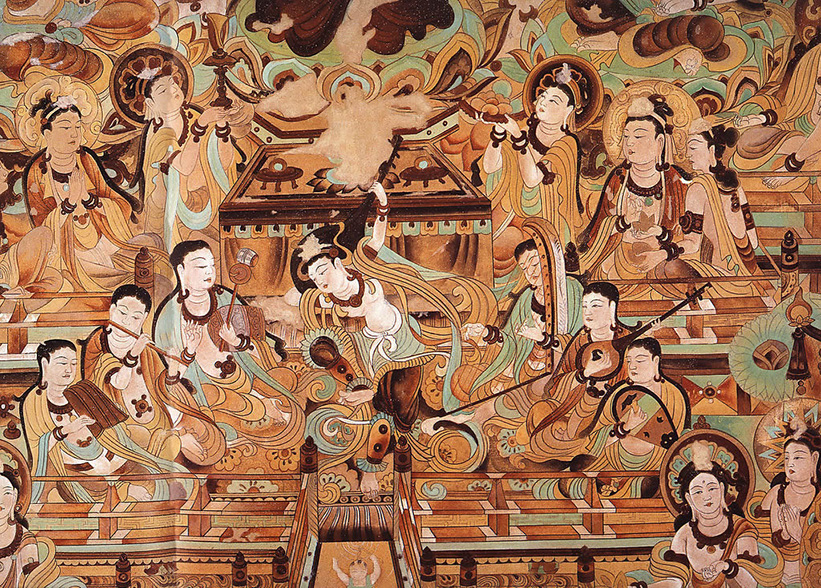
Situated at a strategic point along the Silk Road, Mogao Caves is located 25 kilometers southeast of Dunhuang City. With a history over 1600 years, it was first constructed in 366 AD in Sixteen Kingdoms and represents the great repositories of Buddhist art from the 4th to the 14th century. Now, Mogao caves has 492 caves, housing about 45,000 square meters of murals and more than 2,100 painted sculptures. Among them, the highest painted sculpture is at 35.5 meters (in Cave 96) and the largest mural painting is 47 square meters (in Cave 61). For the precious, unmatched artistic, historical, cultural value, Mogao Caves was listed as the World Heritage Site in 1987.
Highlights to Explore:
To fully explore Mogao Caves and have deep understanding about the Buddhist art, you'd better spend at least half day here. Besides, it is a wise choice to visit Dunhuang Digital Exhibition Center to enjoy "Thousand-Year Maogo" and "Dream Buddhist Land". You won't miss the architectures, stucco sculptures, wall paintings, silk paintings, calligraphy, etc. on the screen and in reality.
Outstanding Caves & Buddha Statues:
- Cave 61: It was built in Five Dynasties (907-960AD) which is one of the largest caves (14.1m deep and 13.57m wide) in Dunhuang. It features the gorgeous paintings with huge size and majesty. This cave is known as the Manjusri's Hall.
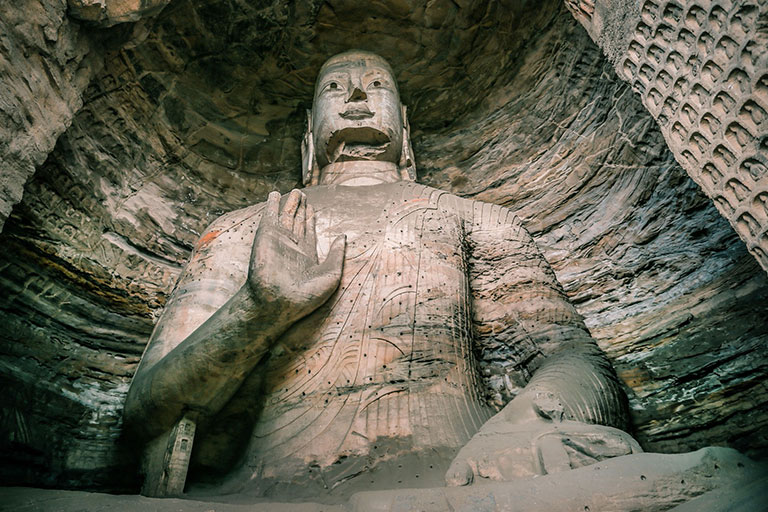
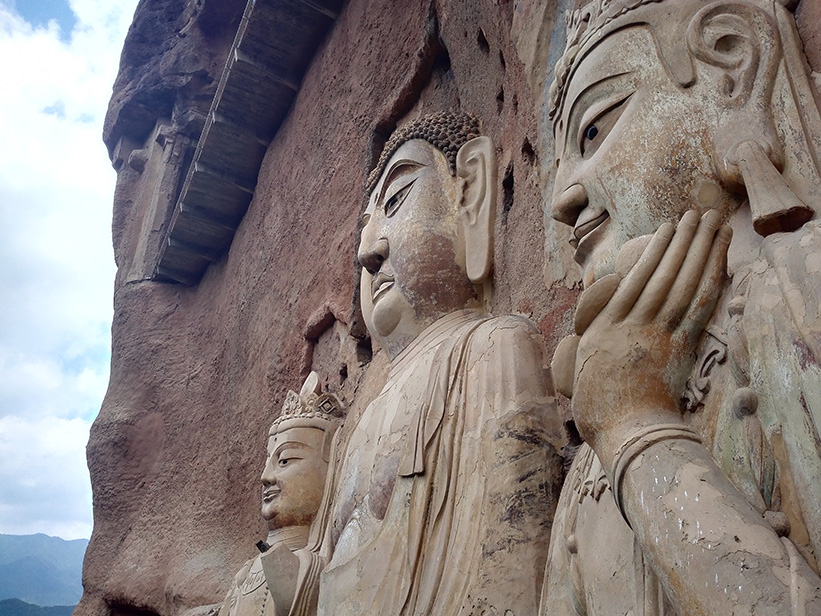
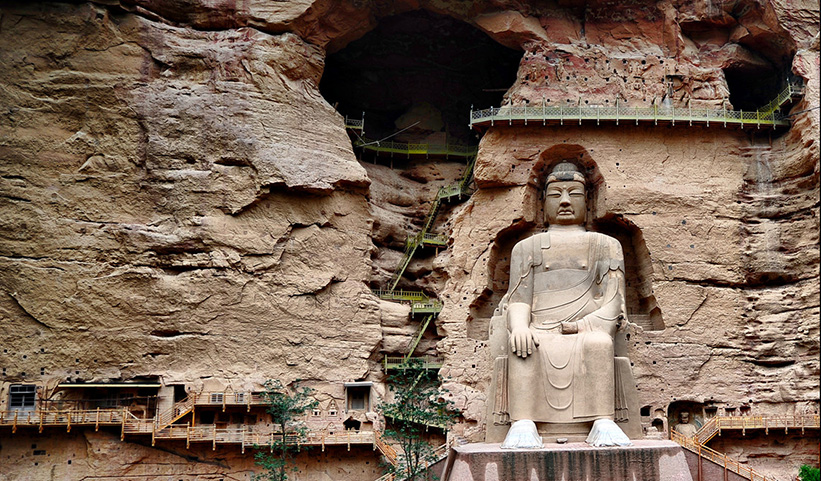
- Cave 130: It was built in High Tang (705-781AD). This cave contains a colossal Buddha statue with 26 meters high of Maitreya seated with pendent legs. It is called the Southern Giant Buddha which is the third largest stone Buddha in the world.
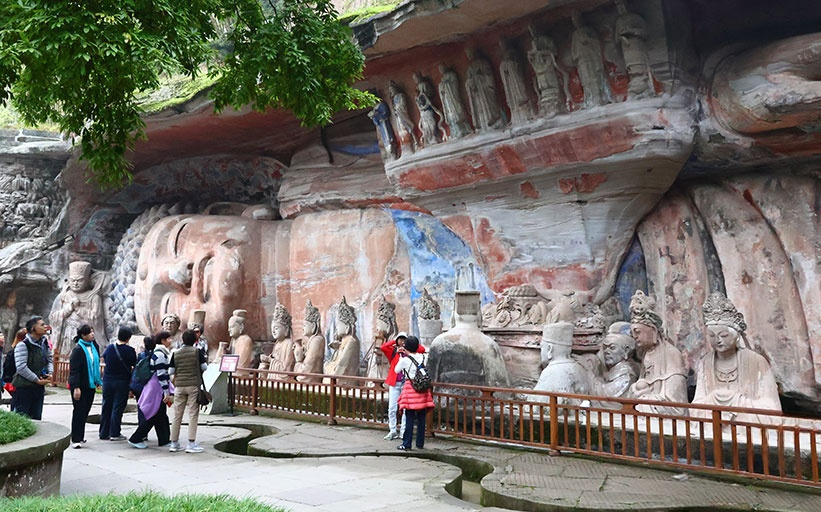
- Cave 148: It was built in High Tang (705-781AD). It has a transverse rectangular layout and a vaulted roof. A giant reclining Buddha has 14.4 meters long signifying the Mahaparinirvana (the great completed nirvana).
- Cave 302: The Sui dynasty contains one of the oldest and most vivid scenes of cultural exchanges along the Silk Road, depicting a camel pulling a cart typical of trade missions of that period.
- Cave 428: This central-pillared cave is the largest constructed built in Northern Zhou Dynasty (557-581AD). The murals tell the jataka tales, preaching scenes, the Enlightenment, the Nirvana, etc.
- Cave 323: It was constructed in Early Tang-Song Dynasty. It is special for the murals illustrating the history of Buddhism in China. On the north wall is the story of Zhang Qian being dispatched to the Western Region by Emperor Wu. And the south wall tells "Two Stone Buddhas Floating on the River" and the bronze Buddha found in 326AD in Yangzhou.
Special Caves:
The eight special caves are No. 45, No. 57, No. 156, No. 158, No. 217, No. 220, No. 254, No. 275, No. 321, No. 322. These special caves are no need to book tickets in advance.
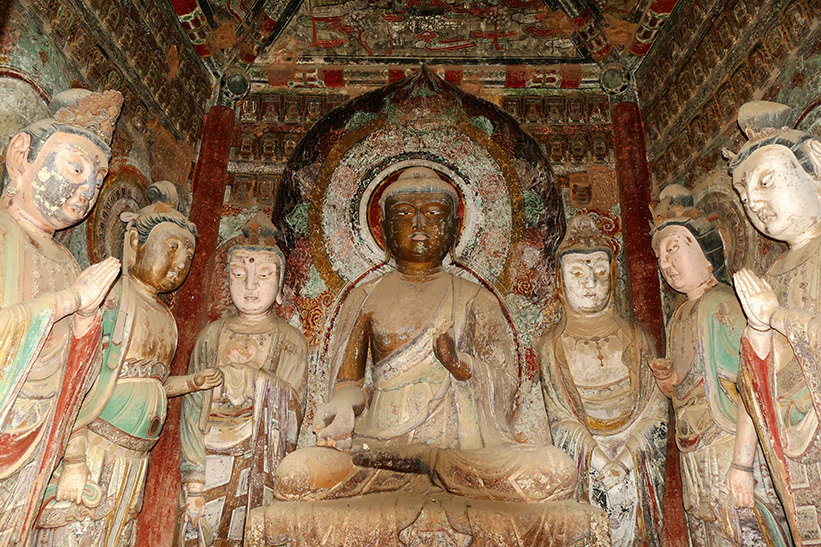
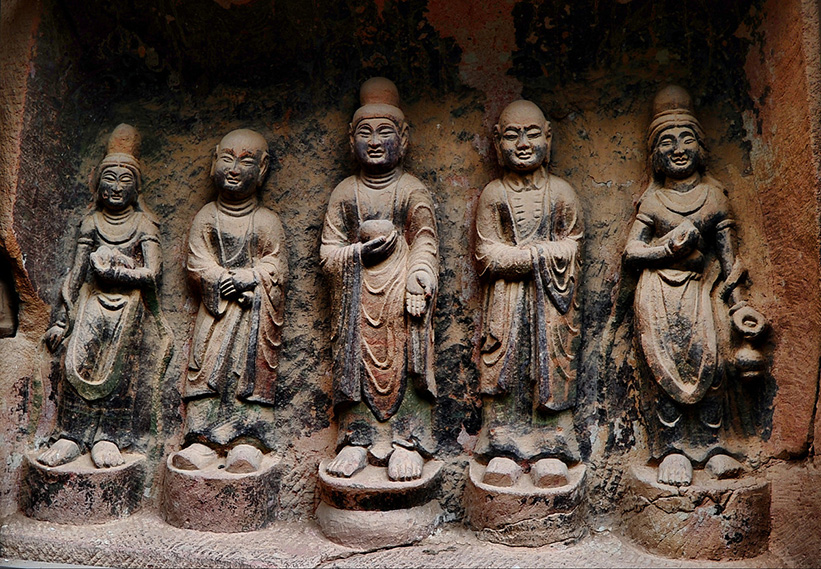
- Cave 45: the lifelike statues and portraits of Bodhisattva and other paintings expressing the life situation of that period.
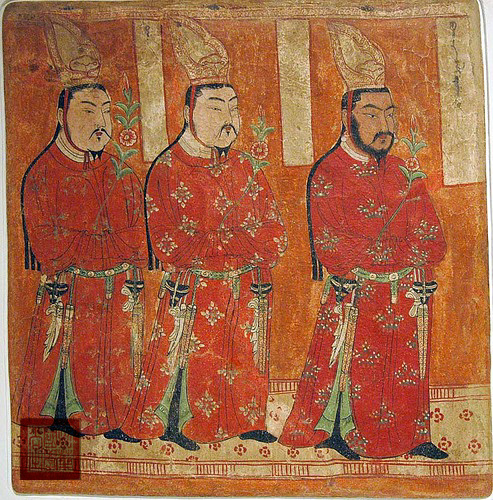
- Cave 220: fabulous paintings of princes from various countries visiting the very prosperous ancient China, which indicated that China was not only in very good prosperity but holding an open heart to the outside regions during then.
- Cave 254: It was built in Northern Wei Dynasty (439-534AD). The calm azure color will attract you most. The murals are mostly depictions of the Jataka, previous life stories of the Buddha.
- Cave 275: It was one of the oldest caves built in Northern Liang (421-439AD). It has a Maitreya Buddha statue in the center who with clam expressions sits cross-ankled. It tells about the stories of Buddhism and the clothes as well as ornaments on the figures reflects the frequent communication between Chinese people and the Western countries.
- Cave 57: admire the famous most beautiful Bodhisattva.
- Cave 217: featured paintings still in bright color of mountains and water styles.
Location
Mogao Town, Dunhuang City, Gansu Province. It is about 25 kilometers from Dunhuang City.
How to Get There
For independent travelers, you can take public bus from Dunhuang Hotel which departs every half hour and charges 8 RMB. Taxi is also available, and may charges about 40 RMB.
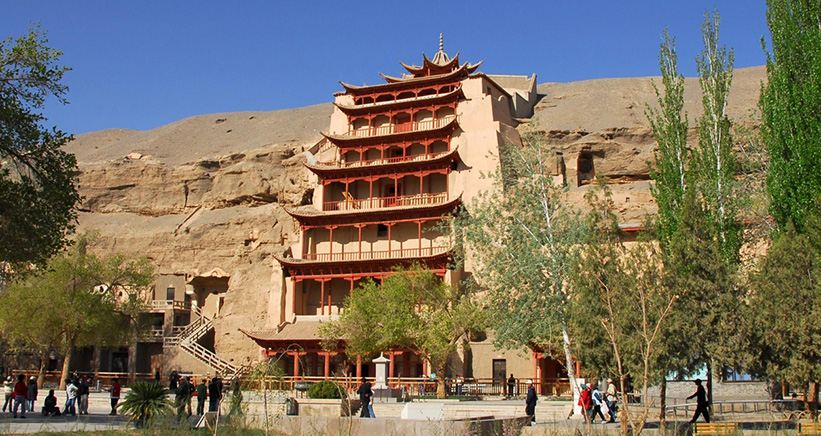
Mogao Caves in Dunhuang
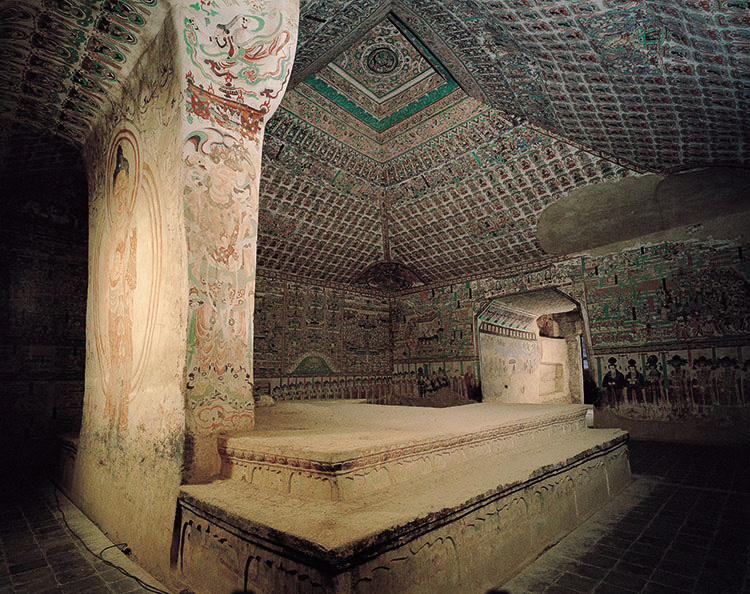
Mogao Caves - Cave 61
Reclining Buddha in Cave 148
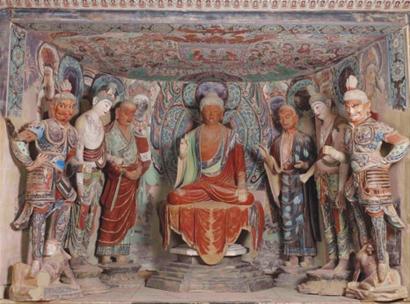
Dunhuang Mogao Caves - Cave 45
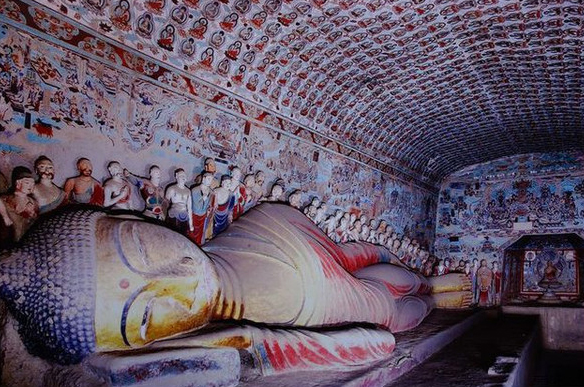
Sleeping Buddha in Cave 148
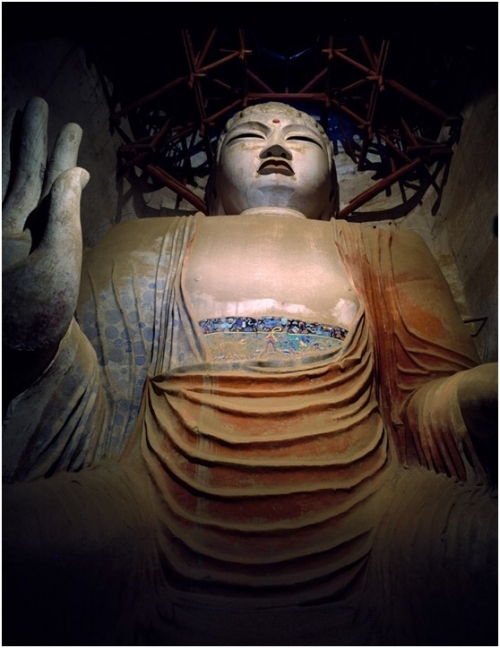
Sitting Buddha in Cave 130
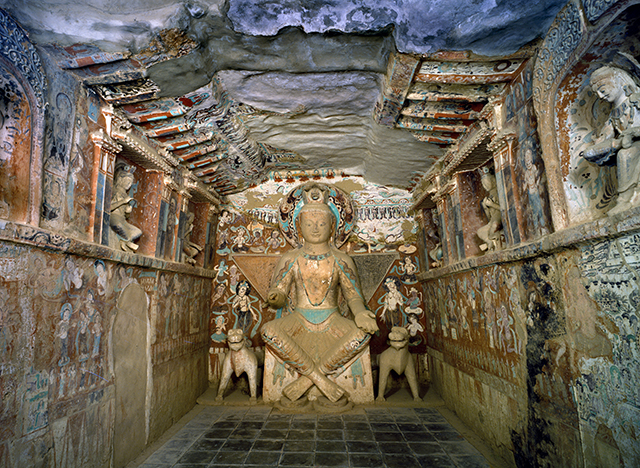
Dunhuang Mogao Caves - Cave 275